What if the manufacturer you're chasing is actually the reason your supply chain keeps breaking?
- Buyers often search for a "fastener manufacturer," assuming in-house production guarantees quality and reliability
- The real risk in fastener sourcing is single-source dependency, not who owns the machines
- A sourcing partner with a global network of ISO-certified manufacturers, like Blue Chip Engineered Products, solves capacity, lead time, and quality problems that a single manufacturer can't
Isn't a Manufacturer More Reliable Than a Sourcing Partner?
Not necessarily. A single manufacturer is tied to one facility's capacity, one set of equipment, and one production schedule. If that line goes down, gets backed up, or can't produce a specific material or process, the buyer's supply stops.
A sourcing partner like Blue Chip works differently: rather than owning one production line, Blue Chip has established direct relationships with a growing network of domestic and global ISO Certified manufacturers, spreading capacity and risk across multiple qualified sources instead of concentrating it in one.

What Does a Sourcing Partner Actually Do That a Manufacturer Doesn't?
A manufacturer's job is to produce parts. A sourcing partner's job is to solve the buyer's entire fastener problem, from initial design through delivery. Blue Chip's Solve, Source, Schedule, Service approach starts before a single part is made: getting involved early in the design process to suggest alternate materials, manufacturing processes, or assembly methods that improve efficiency and product quality.
A manufacturer executes a print.
A sourcing partner helps write the print in the first place, then finds the right manufacturing process, whether that's cold heading, screw machining, stamping, or molded parts, to fit the application.
Does Working With Multiple Manufacturers Create More Risk, Not Less?
The opposite is true when the network is managed correctly. The risk in fastener supply isn't "too many manufacturers" — it's zero visibility into backup capacity.
Blue Chip's global manufacturer network means that if one source hits a capacity constraint or lead-time issue, another qualified, ISO-certified source can step in without the buyer ever seeing a disruption.
This is the same principle behind Vendor Managed Inventory: the goal isn't which single entity holds the relationship; it's whether the system behind it eliminates supply risk.
How Does a Sourcing Partner Handle Custom or Complex Parts?
Choosing a supplier for custom industrial fasteners is really about choosing a long-term relationship, not just a one-time production run, according to Blue Chip's guide on how to choose a supplier for custom industrial fasteners.
Custom and engineered parts often require capabilities that no single manufacturer has in-house, like combining wire forming, weld products, and secondary operations on one component.
A sourcing partner can match each step of that process to the manufacturer best equipped for it, something a single-facility manufacturer structurally cannot do.
What Happens to Inventory and Lead Times With a Sourcing Partner Model?
Sourcing partners can control the inventory side of the equation in ways a single manufacturer usually can't.
Blue Chip uses yearly inventory purchases and blanket purchase agreements to reduce lengthy lead times, eliminate large minimum buys, and improve customer cash flow, while keeping parts in stock and ready to ship from Blue Chip's warehouse.
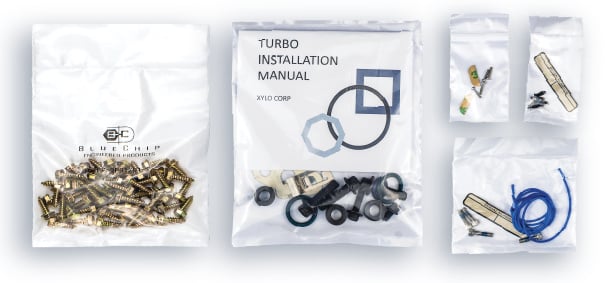
Pair that with kitting and packaging, and buyers get consolidated parts, custom branding, and barcode or data matrix coding built directly into the delivery process, something a pure manufacturer relationship rarely includes.
Is a Sourcing Partner More Expensive Than Going Direct to a Manufacturer?
Going "direct" to a manufacturer often looks cheaper on a per-piece quote but usually shifts hidden costs onto the buyer: managing multiple manufacturer relationships, holding safety stock to cover lead-time variability, and handling kitting or packaging internally.
A sourcing partner absorbs those costs into a single relationship and typically reduces total landed cost through material savings (cold heading alone can cut scrap-related costs by more than 50% compared to screw machining), consolidated logistics, and fewer emergency freight situations caused by stockouts.
FAQ: Fastener Manufacturer vs. Sourcing Partner


