Importance of Secure Fastening Solutions
-
Anchor bolts and U-bolts provide secure fastening in construction.
-
Anchor bolts embed in concrete for strong foundational support.
-
U-bolts clamp pipes and conduits for reliable alignment.
-
Material choice ensures durability and site-specific performance.
-
Selection and proper installation are key for safety and longevity.
Secure fastening solutions, such as anchor bolts and U-bolts, are critical for ensuring structural integrity, safety, and longevity across construction projects ranging from buildings to infrastructure.
These engineered fasteners provide reliable load transfer and stability, preventing failures under heavy loads or environmental stresses.
At Blue Chip Engineered Products, our ISO-certified supply chain supports these essentials through vendor-managed inventory for guaranteed availability.
Anchor Bolts in Construction: Types and Core Functions
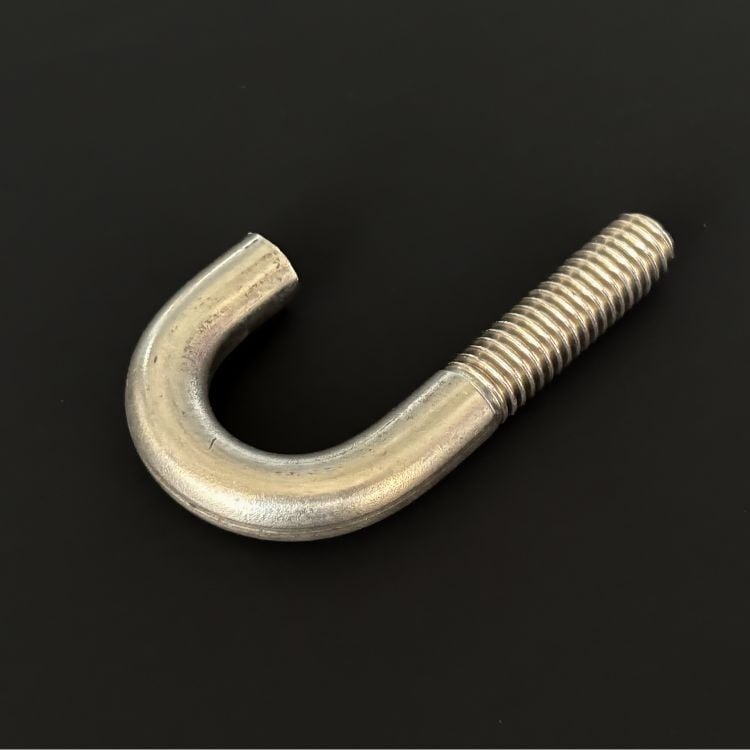
Anchor bolts embed in concrete to attach structural elements such as base plates and columns, providing superior pull-out resistance and stability.
Common types include L-shaped for maximum embedment, J-bolts for cost-effective anchoring, headed bolts for permanent installations, and swedge anchors for high-strength connections in highways and bridges.
These foundation anchors handle tensile and shear forces effectively in masonry and concrete applications.
Common Types of Anchor Bolts and Their Uses
L-shaped anchor bolts excel at supporting structural steel columns, light poles, and heavy equipment thanks to their hook design, which grips concrete firmly.
Headed and double-end rod anchors secure large structures, such as traffic signals and building columns, with welded plates for added stability. Swedge anchor bolts provide exceptional pull-out strength for girders, piers, and transportation projects via indented non-threaded ends.
Anchor Bolt Material Choices and Coatings
Carbon steel anchor bolts are suitable for general use, while stainless steel and hot-dip galvanized options resist corrosion in harsh environments such as marine or chemical plants.
Coatings such as zinc plating enhance durability and align with standards for long-term performance in outdoor construction.
Blue Chip offers these in custom grades to meet project specs via blanket purchase agreements.
Applications of Anchor Bolts in Construction
Anchor bolts fasten steel columns to foundations, secure utility poles, and anchor machinery, ensuring compliance with building codes.
They transfer loads from superstructures to concrete bases in commercial buildings, bridges, and industrial facilities. In petrochemical and power plants, they support heavy equipment against vibrations.
U-Bolts: Design, Functionality, and Industry Applications
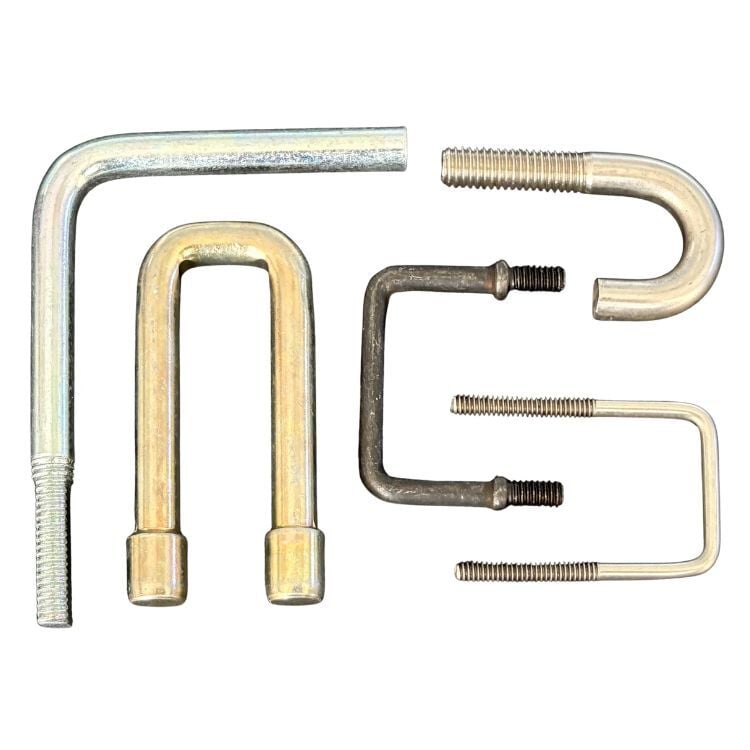
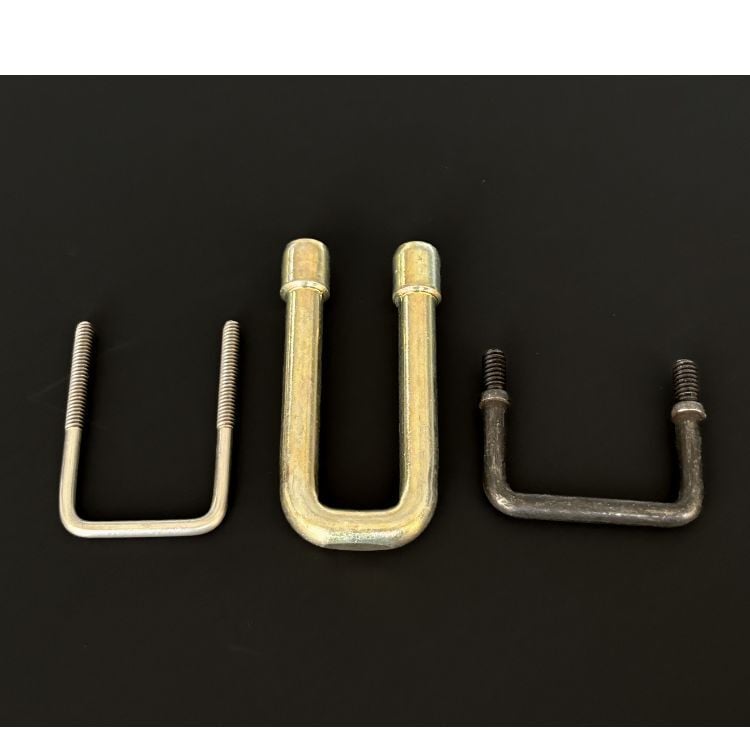
U-bolts feature a U-shaped bend with threaded legs to clamp pipes, conduits, and cylindrical objects securely against supports.
Ideal for pipe clamps and structural guides, they absorb vibrations and maintain alignment in dynamic environments.
These industrial U fasteners come in round, square, and custom bends for versatile fastening.
Types of U-Bolts and Customization Options
Plain U-bolts are suitable for dry indoor use, while zinc-plated and hot-dip galvanized U-bolts are ideal for moisture-exposed or outdoor settings.
Square U-bolts secure beams and framing, and custom-forged versions adapt to unique diameters via automated kitting at suppliers like Blue Chip.
Stainless steel variants excel in marine and food-processing applications for their hygiene and corrosion resistance.
Materials, Durability, and Environmental Considerations
Carbon and alloy steel provide strength for heavy loads, with galvanized finishes protecting against rust in industrial exposures.
Stainless steel U-bolts withstand chemicals and saltwater, ensuring reliability in plumbing, automotive, and agriculture.
Durability reduces maintenance, supported by Blue Chip's data-driven inventory tech.
U-Bolt Use Cases in Construction and Industry
U-bolts stabilize piping systems, exhaust systems, and cable trays during construction, preventing shifts in mechanical and electrical setups. They act as anchors for conveyors and structural supports in warehouses and heavy machinery. In marine and electrical applications, they secure conduits against vibrations.
Anchor Bolts vs. U-Bolts: Comparing Fastening Solutions
| Feature | Anchor Bolts | U-Bolts |
|---|---|---|
| Primary Shape | L, J, headed and straight | U-shaped with threaded legs |
| Main Application | Concrete embedding for structures | Clamping pipes/tubes |
| Load Type | Tensile/shear in foundations | Vibration/clamping on cylinders |
| Materials | Carbon, stainless, galvanized | Carbon, alloy, stainless |
| Installation | Poured or drilled into concrete | Bolted around the object |
| Best For | Base plates, columns | Plumbing, automotive |
Choosing the Right Fasteners: Key Selection Criteria
Evaluate load capacity, embedment depth, concrete strength, and exposure to choose between anchor and U-bolts. Consider codes like ACI for anchors and environmental factors for coatings. Blue Chip's Solve-Source-Schedule-Service approach enables early design involvement to achieve optimal specs.
Best Practices: Installation, Inspection, and Maintenance
Drill precise holes, use torque wrenches for anchors, and ensure proper embedment to avoid failures. Inspect for corrosion and retighten U-bolts periodically in vibrating applications.
Blue Chip's kitting with barcodes and RFID supports reliable deployment and tracking.

Ensuring Project Longevity and Safety
Anchor bolts and U-bolts deliver secure fastening for durable construction, backed by quality supply from partners like Blue Chip Engineered Products.
Partnering early optimizes choices, reduces waste, and guarantees on-time delivery through VMI.


