
Kitting Isn't a Packaging Service — It's a Supply Chain Strategy
Most buyers first meet kitting as a line item on a quote: bag the parts, label the box, ship it. That framing undersells what kitting actually does. Done well, kitting changes how parts arrive at the line, how many transactions your team processes, and how much labor goes into hardware that costs pennies.
Here's a Q&A walkthrough of what changes when you treat kitting as strategy instead of packaging.
What is fastener kitting, really?
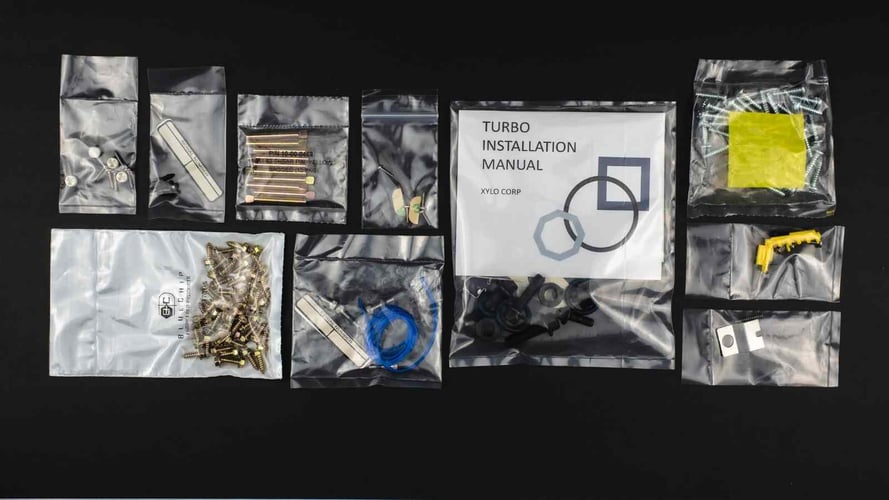
Kitting is the practice of consolidating all the hardware required for an assembly — the screws, nuts, washers, standoffs, spacers, and specials — into a single, verified, labeled unit that arrives ready for the operator to use. It can be a multi-part kit built to your assembly bill of materials, or a single-part kit packaged in exact box quantities for a specific workstation.
Blue Chip Engineered Products builds and stocks thousands of kits daily using automated packaging equipment, with capabilities that include box-specific quantities based on your assembly BOM, weight and lot counting for content accuracy, customer-specific box labeling, and inserted instruction sheets (Blue Chip Kitting & Packaging).
Why is kitting a supply chain decision rather than a packaging decision?
Because the packaging is the smallest part of the value. Kitting collapses work upstream of your assembly line.
Consider one assembly with 14 fastener line items. Unkitted, that's potentially 14 part numbers to source, 14 receipts to inspect, 14 bins to count and replenish, 14 opportunities for a stockout to halt an assembly, and an operator walking a stockroom to gather hardware before the first bolt goes in. Kitted, it's one part number, one receipt, one bin, one shortage risk to manage, and zero picking time at the line.
That's not a packaging change. That's a change to your transaction volume, stockroom footprint, labor allocation, and line-stop exposure.
What problems does kitting actually solve on the floor?
Line-side picking time. Operators stop hunting for hardware and start assembling. The kit is the pick.
Wrong-part errors. When the kit is built to the BOM and verified by weight and lot count, the operator can't grab a 20mm bolt from the bin next to the 25mm bolt. The error is designed out rather than inspected out.
Partial-shortage line stops. A single missing washer can idle an assembly that has every other component in place. Kitting converts many independent shortage risks into one managed one, which is far easier to monitor and protect.
Stockroom sprawl. Dozens of low-value hardware bins consume shelf space, cycle-count hours, and floor discipline. Kits consolidate that footprint.
Purchasing overhead. Buyers spend disproportionate time cutting POs for small hardware. One kit part number replaces many.
How does kitting connect to vendor-managed inventory?
This is where kitting stops being a service and starts being a system. Kitting defines what arrives at the line. VMI governs when and how much.
Pair them and the hardware side of your supply chain becomes largely self-managing: your supplier monitors consumption using electronic scales, RFID, and wireless technology powered by data-driven software, then replenishes kits against agreed min/max levels before you run short (Blue Chip VMI). Kitting and packaging capability is one of the core things to look for in a VMI partner—the infrastructure to build and stock customized hardware kits at scale (Success Factors for a High-Performing VMI Program).
Blue Chip lists Vendor Managed Inventory among its kitting capabilities: stock available and ready for immediate shipment (Blue Chip Kitting & Packaging). The two programs are designed to run together, not as separate purchases.
If you're still evaluating the inventory side, VMI Isn't About the Vendor — It's Eliminating Your Inventory Problem makes the same argument from the replenishment angle, and Fastener Inventory: Eliminate Stockouts Without Overbuying covers how min/max levels get set from real usage data.
What if the kit includes custom or made-to-print parts?
That's common, and it's where sourcing capability determines whether the kitting program holds up. A kit is only as reliable as its longest-lead component. If one made-to-print screw machine part in a 14-piece kit has a 16-week lead time, your kit inherits that lead time unless someone plans around it.
The strategic answer is upstream: blanket purchase agreements and held inventory so long production lead times don't delay the kit. Blue Chip takes a "From Print to Part" approach, working with a network of domestic and global ISO-certified manufacturers to produce parts to your prints, then combining custom production with blanket purchase agreements so inventory is built and held ahead of demand (Screw Machine Parts & Custom Fasteners, Custom Fasteners, Kitting, Packaging and JIT Delivery).
Can kits ship as our own branded product?
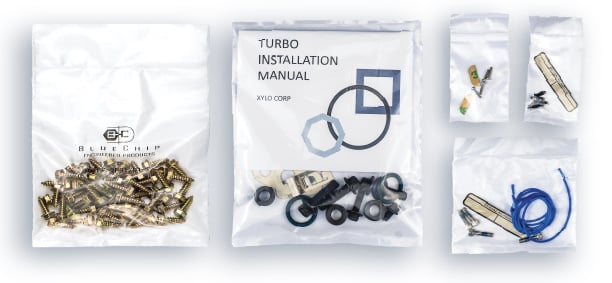
Yes — and this is one of the more underused strategic applications. Kits can include customer-specific box labeling for white-labeled shipment, printed logos, barcodes, data matrix codes, contents descriptions, and inserted instruction sheets (Blue Chip Kitting & Packaging).
For manufacturers shipping service kits, spare-parts kits, replacement hardware, or field-installation packages, that means the supplier can produce a finished, customer-ready product without your plant touching it. The kit ships from the supplier's warehouse under your brand.
What should we look for in a kitting partner?
Ask about five things:
- Quality system. ISO 9001:2015 certification, with incoming inspection on every lot before it goes into stock or ships (Blue Chip Quality).
- Verification method. How is kit content accuracy confirmed? Weight and lot counting beats visual checks.
- Automation. Automated packaging equipment is what makes consistent, high-volume kitting economical rather than a hand-pack cost center.
- Sourcing depth. Can they handle standard hardware and made-to-print specials in the same kit?
- Inventory technology. Electronic scales, RFID, barcoded containers, and reporting — the infrastructure that lets kitting run as a program instead of a series of orders.
Blue Chip's kitting operation covers assembly, kitting, testing, inspection, rework, material handling, warehousing, hand pack and sort, and distribution and fulfillment (Blue Chip Kitting & Packaging).
How do we start without disrupting production?
Start narrow. Pick one high-volume assembly with a messy hardware BOM — ideally one that has caused a shortage-driven line stop in the past year. Kit that one assembly. Measure picking time, shortage events, receipt transactions, and stockroom bin count before and after. Then expand to the next assembly using what you learned.
This mirrors the recommended approach to scaling a VMI program: pilot with one product category or a defined set of high-velocity SKUs, validate your data flows and replenishment logic, measure your KPIs, then expand systematically (Success Factors for a High-Performing VMI Program).
The takeaway
If kitting sits in your purchasing process as a packaging upcharge, you're paying for the bag and leaving the strategy on the table. Treated as a supply chain decision — tied to your BOM, your replenishment data, and your production schedule — kitting reduces transactions, removes labor from the line, designs out assembly errors, and shrinks the stockroom.
See what a kitting program built around your assemblies looks like: visit Blue Chip's Kitting & Packaging page or request a quote for a fastener specialist to review your hardware BOM.
Frequently Asked Questions
About Kitting & Packaging
What is fastener kitting?
Fastener kitting is the process of consolidating all hardware required for an assembly — screws, nuts, washers, standoffs, and custom parts — into a single labeled, verified unit that arrives ready to use at the point of assembly. Kits can be multi-part, built to an assembly BOM, or single-part in exact box quantities.
Is kitting just packaging?
No. Packaging is how the parts are contained; kitting is how the supply chain is structured. Kitting reduces part numbers, receipts, purchase orders, stockroom bins, line-side picking time, and shortage exposure. The packaging is the visible output of a much larger operational change.
How does kitting reduce costs if the kit itself costs more per unit?
The savings sit outside the piece price: fewer purchase orders and receipts, less cycle counting, less stockroom space, less operator picking and walking time, fewer wrong-part errors, and fewer shortage-driven line stops. Compare total cost of the hardware process, not the unit price of the bag.
Can a kit include custom, made-to-print parts?
Yes. Blue Chip sources screw machine parts and custom fasteners to print through a network of domestic and global ISO-certified manufacturers, and uses blanket purchase agreements to hold inventory so long lead times on specials don't delay kit availability (Screw Machine Parts & Custom Fasteners).
How is kit accuracy verified?
Through weight and lot counting, which confirms kit-contents accuracy on every unit, plus incoming inspection of every lot received before it goes into stock or ships (Blue Chip Kitting & Packaging, Blue Chip Quality).
Can kits ship with our branding?
Yes. Kits support customer-specific box labeling for white-labeled shipments, printed logos, barcodes, data matrix codes, contents descriptions, and inserted instruction sheets—so service and spare-parts kits can ship customer-ready (Blue Chip Kitting & Packaging).
How does kitting work with vendor-managed inventory?
Kitting defines what arrives at the line; VMI defines when and how much. Under a combined program, the supplier monitors kit consumption with electronic scales, RFID, and wireless technology and automatically replenishes against agreed min/max levels, so kits stay available without your team issuing orders (Blue Chip VMI).
What kinds of operations benefit most from kitting?
Assemblies with many low-value hardware line items, plants with recurring fastener stockouts or heavy expediting, operations where assemblers spend meaningful time gathering hardware, manufacturers shipping service or spare-parts kits to end customers, and multi-plant operations coordinating the same hardware across locations.
How do we get started?
Pilot one high-volume assembly with a complex hardware BOM, measure picking time, shortage events, and transaction counts before and after, then expand.
Start by reviewing Blue Chip's Kitting & Packaging capabilities.


