
DIY fastener bagging looks cheap—until you add up the hidden labor, errors, and stockouts that quietly eat your margins.
This is the story of one manufacturer that decided to stop hand‑counting hardware and instead partner with an ISO‑certified kitting specialist to turn a bottleneck into a competitive advantage.

When “Simple” Fastener Bagging Became a Big Problem
On paper, their process was straightforward: operators pulled fasteners from bins, counted them into bags, slapped on a label, and staged them for assembly. In reality, it was a daily grind of rework, chasing parts, and production interruptions.
The manufacturer built complex assemblies that required multiple hardware kits per unit—bolts, nuts, washers, and specialty fasteners all grouped for specific operations. Each kit was supposed to arrive at the line “ready to build,” but the manual approach introduced three chronic problems:
- High touch labor that didn’t add value to the end product
- Frequent miscounts and mixed parts inside bags
- Unpredictable stockouts that stopped the line over a handful of missing fasteners
No single event looked catastrophic. But over dozens of orders and hundreds of kits, costs piled up.
The Hidden Costs of DIY Fastener Bagging
1. Labor Drain and Line Distractions
Because kitting was done manually, highly skilled operators spent hours per shift counting and bagging fasteners instead of running machines or solving production issues. Supervisors regularly pulled people from more critical work to “help get kits caught up” before a big run.
The result:
- Overtime to finish both production and kitting
- Constant task‑switching between value‑add work and repetitive counting
- Rising fatigue, which only made miscounts more likely
From a distance, it looked like “just part of the job.” Up close, it was a structural misallocation of talent.
2. Miscounts, Mixed Parts, and Rework
Manual counting and basic scales made accuracy aspirational at best. Under pressure to keep the line fed, operators worked quickly and trusted their eyes. That led to:
- Under‑counts discovered at the line, forcing last‑minute scrambles for “just two more screws”
- Over‑counts that distorted true usage and made MRP data unreliable
- Bags with a wrong part mixed in—a different length bolt or wrong coating—triggering rework or failures later
Each error triggered a cascade: stop the station, find the right parts, rework assemblies, reprint labels, and update paperwork. None of this was visible on a single job traveler, but it chipped away at throughput every day.
3. Inventory Confusion and Sudden Stockouts
Because fasteners were pulled in bulk and manually kitted, on‑hand inventory never matched the ERP's inventory. Kits were staged in multiple locations: some at the line, some in WIP racks, some in a supervisor’s “hot corner” for urgent orders.
Purchasing thought there was plenty of stock until the floor called to say the last box was empty.
This led to:
- Emergency purchase orders and expedited freight
- Inflated safety stock “just in case”
- Frustrated planners who couldn’t understand why a cheap part kept shutting down expensive equipment
A few cents’ worth of hardware became a recurring reason for late shipments and bruised customer relationships.
The Turning Point: “We Don’t Want to Be in the Bagging Business”
The shift began when a new operations leader asked a simple question: “Why are our best people spending this much time counting washers?”
Once they walked the process, it was clear that fastener bagging was essential but not core to the company’s differentiation.
They realized:
- They were effectively running a small, manual packaging operation inside a manufacturing plant.
- Investing in more people or equipment for DIY bagging would not make their product better—only slightly less painful to assemble.
- There were specialists who did nothing but kitting and packaging for fasteners and components all day, with purpose‑built equipment and processes.
That’s when they started looking for an ISO‑certified partner that could take the entire kitting burden off their plate.
Enter Outsourced Kitting: From Print to Part
The manufacturer partnered with Blue Chip Engineered Products, an ISO‑certified fastener supplier with deep experience in kitting, packaging, and vendor-managed inventory.
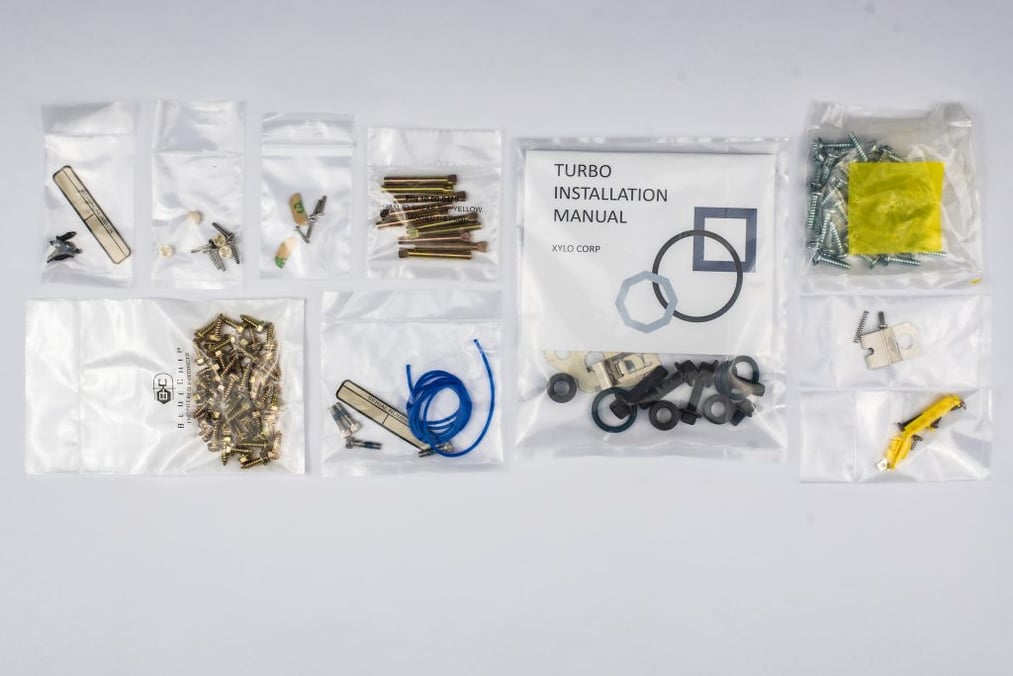
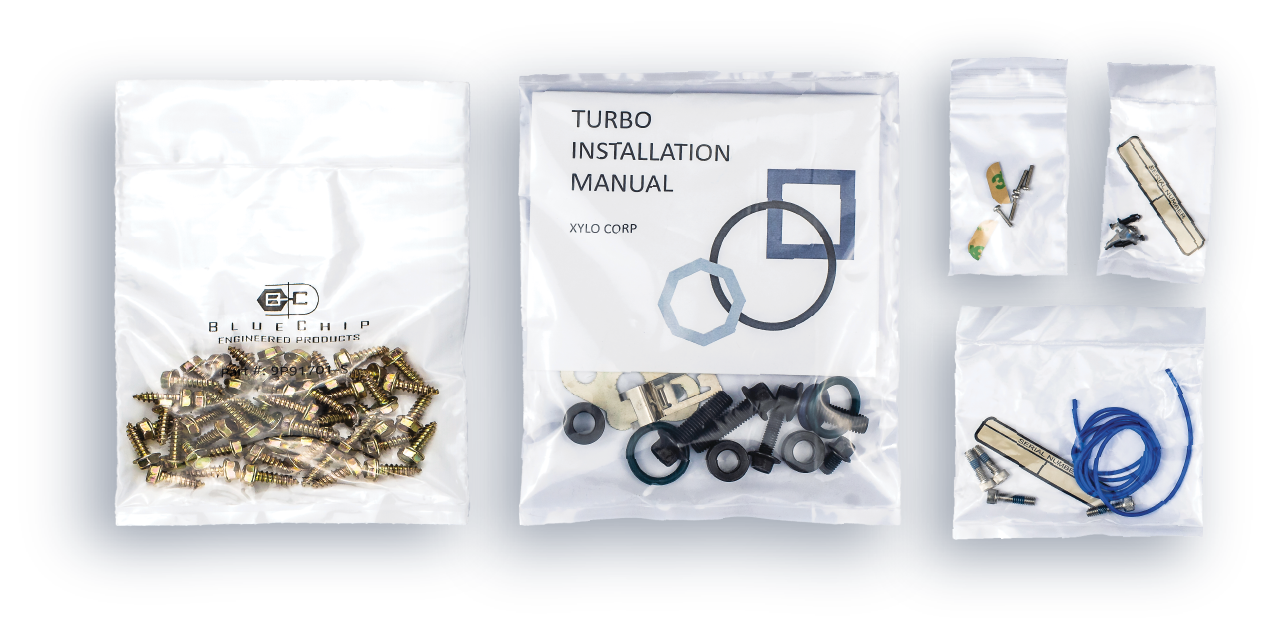
Engineering Kits Upfront
Instead of simply recreating the old bags, Blue Chip reviewed the customer’s prints, BOMs, and usage patterns. Together they:
- Standardized kit contents to reduce variation and confusion at the line
- Grouped fasteners in ways that matched actual assembly steps
- Considered labeling, barcodes, and data matrix codes to make kits easy to identify and scan
This Solve → Source → Schedule → Service mindset ensured the new kits supported both production and supply chain efficiency from day one.
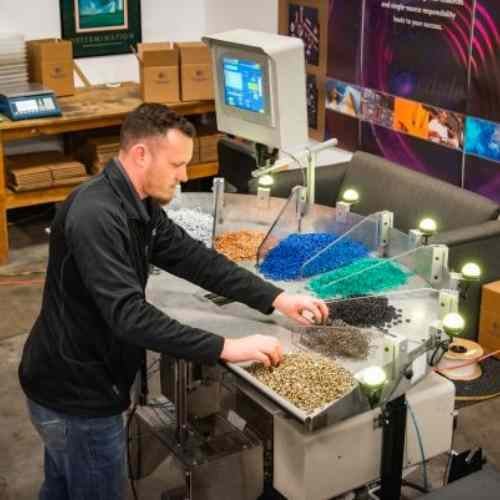
Automated Bagging, Labeling, and Packaging
On Blue Chip’s side, the process looked very different from a table and a scoop:
- Advanced poly baggers automatically counted and packaged fasteners of all sizes
- Inline thermal transfer printers applied accurate labels, including company logos, part numbers, barcodes, and data matrix codes
- Kits were built with single or multiple components, then boxed, skin‑carded, or otherwise customized to the customer’s requirements
Because Blue Chip does kitting and packaging at scale, this level of automation and consistency is standard—not an exception.
Blanket Orders and Line-Ready Kits
Rather than placing constant short‑term POs for bulk fasteners, the manufacturer set up blanket agreements for predefined kits based on forecasted annual usage.
Blue Chip built and stocked those kits in their own warehouse and shipped them against scheduled releases, so the plant received:
- Line‑ready hardware kits, not loose parts
- Consistent packaging and labeling every time
- Short lead times and fast response when demand spiked
This drastically simplified purchasing and planning while ensuring the line always had what it needed.
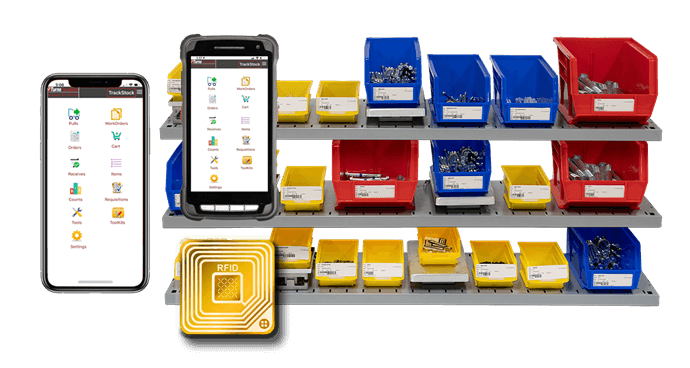
Eliminating Stockouts with RFID-Enabled Vendor Managed Inventory
Kits and fasteners are only as reliable as the inventory system behind them. To prevent the old stockout problems from resurfacing in a new form, the manufacturer also adopted Blue Chip’s Vendor Managed Inventory (VMI) program enhanced with RFID and wireless technology.
Real-Time Inventory Tracking
Instead of manual counts and guesswork, Blue Chip’s VMI system uses:
- RFID tags and barcodes on kits and bins
- Electronic scales integrated with wireless systems
- Data‑driven software that monitors consumption and triggers replenishment
As fasteners or kits are removed during production, RFID and wireless readers automatically update inventory levels. When quantities hit predefined minimums, replenishment orders are generated based on real usage and projected needs, not hunches.
Less Overhead, More Confidence
For the customer, this meant:
- Fewer emergency calls and expedites—stockouts became rare events
- Lower overall inventory investment, because VMI allowed tighter control and reduced safety stock
- Clear, auditable visibility into fastener usage, which supported both quality and compliance requirements
Engineers knew the right hardware would be available for upcoming builds. Purchasing could spend more time on strategy and less time chasing parts.
For a deeper dive into how RFID and wireless technologies transform VMI, Blue Chip’s guide on RFID and Wireless Technology in Vendor Managed Inventory is worth a read.
The Results: From Bottleneck to Strength
Within months of transitioning from DIY bagging to outsourced kitting and RFID‑enabled VMI, the manufacturer saw tangible improvements.
Labor and Productivity
- Operators refocused on higher‑value production work instead of counting and bagging
- Supervisors stopped playing “firefighter” on kit shortages and rework
- Changeovers moved faster because line‑ready kits arrived complete and clearly labeled
The net effect was more throughput from the same people and equipment.
Quality and Accuracy
- Automated counting and packaging dramatically reduced miscounts and mixed‑part errors
- First‑pass yield improved as fewer assemblies were built with incomplete or incorrect hardware
- Traceability improved through consistent labels, barcodes, and data matrix codes tied back to lot‑controlled inventory
This lifted confidence at every level—from operators to quality managers to customers.
Inventory, Cash, and Customer Service
- Fastener stockouts dropped sharply, taking a major source of line stoppages off the table
- Overall fastener inventory was optimized, not bloated, thanks to data‑driven VMI
- On‑time delivery metrics improved, and customers noticed the difference
What started as “just fastener bagging” turned into a powerful lever for cost, quality, and delivery performance.
How to Know It’s Time to Stop DIY Fastener Bagging
If any of the following sound familiar, it may be time to rethink your approach:
- Skilled operators or supervisors spend hours each week counting and bagging fasteners
- You see recurring line stoppages because a kit is short two screws or has the wrong washers
- Bulk fastener inventory never matches what your system says you have
- You carry more safety stock than you’d like “just in case”
- Quality or traceability requirements are getting stricter, and manual bagging can’t keep up
At that point, staying with DIY bagging is not risk‑free—it’s an active decision to accept hidden cost and operational noise.
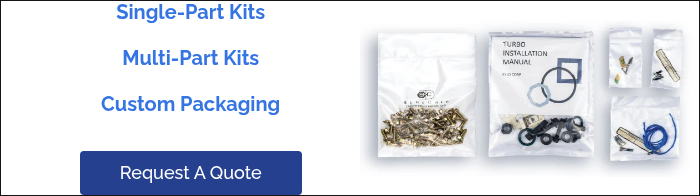
Next Step: Turn Fastener Kitting into a Competitive Advantage
You don’t have to build an automated kitting and packaging operation inside your own four walls. Blue Chip Engineered Products has nearly four decades of experience helping manufacturers streamline their fastener supply chain with: [bcepi](https://www.bcepi.com)
- Automated kitting and packaging for single or multiple components
- Custom poly‑bagging, boxing, fulfillment, and skin carding
- Accurate labeling with logos, part numbers, barcodes, and data matrix codes
- RFID‑enabled Vendor Managed Inventory that eliminates stockouts and reduces overhead
If your team is still hand‑counting fasteners or battling kit‑related headaches, now is the time to explore a better way.

See how Blue Chip’s kitting and packaging services can simplify your operations, cut hidden costs, and protect your production schedule—visit our Kitting & Packaging page today:
https://www.bcepi.com/kitting-and-packaging
For additional context and related best practices, you can also explore other Fasteners 101 resources from Blue Chip, including articles on the importance of customized kitting and packaging and the advantages of kitting for specialty fasteners.


